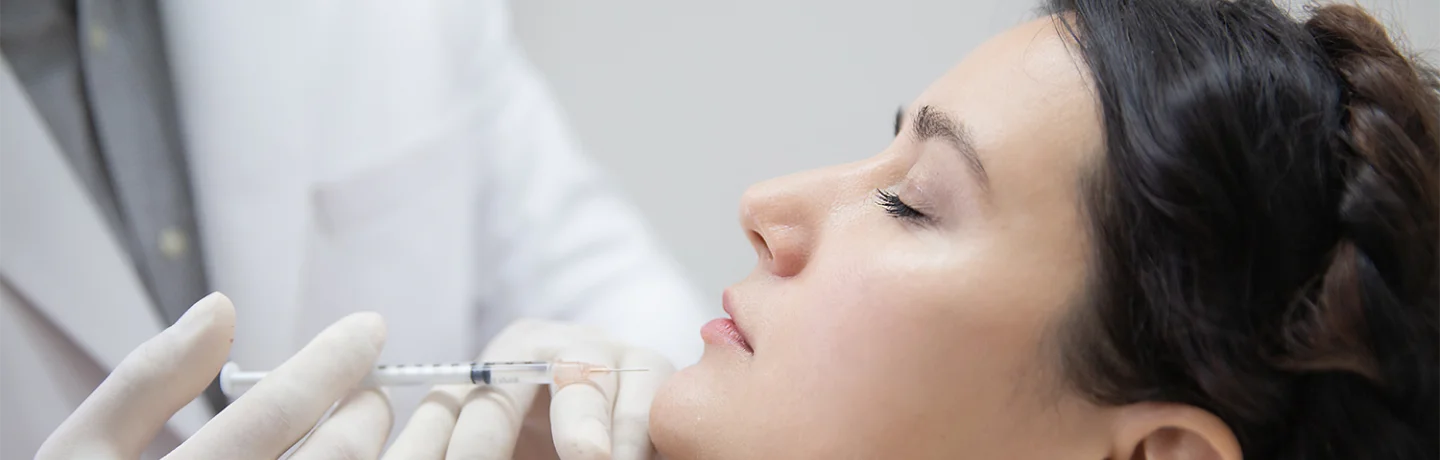
Botox Injection Technique: Treatment Steps Explained by Physicians and When Results Appear AR
Botox for the skin is a medical procedure used to reduce expression wrinkles by relaxing the muscles responsible for tightening the skin, such as forehead lines and lines around the eyes. It differs from fillers, which aim to fill hollows and restore volume. Choosing the most appropriate procedure depends on the type of wrinkles—dynamic or static—and is determined after a specialized medical evaluation.
Introduction
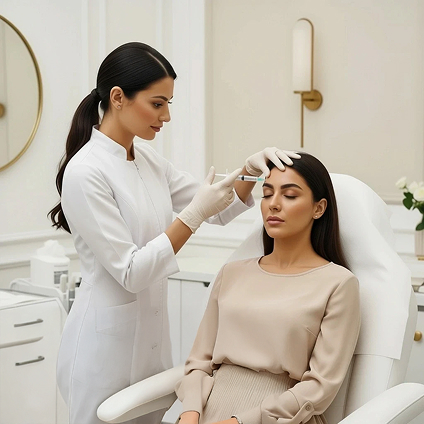
Botox for the skin is a medical cosmetic procedure based on injecting Botulinum toxin in precise doses to reduce expression wrinkles caused by repetitive facial muscle movements, such as forehead lines and lines around the eyes.
Botox works by temporarily relaxing the muscles, giving the skin a smoother and calmer appearance without changing facial features when used correctly.
Its benefit differs from fillers, which are used to restore volume, and the choice between them depends on the type of wrinkles and the patient’s condition.
To determine whether Botox or fillers are more suitable for your case, book your consultation now with a qualified specialist at Mayam Medical Center.
How does Botox work on the skin?
Botox treats the primary cause of many wrinkles, which is the repetitive contraction of facial muscles, not the skin itself. Therefore, it is considered an effective option for wrinkles that appear with expression and fade with relaxation.
When Botox is injected into specific muscles, it works by temporarily blocking the transmission of nerve signals to those muscles, leading to partial relaxation. As a result, the tension of the skin over the muscle decreases, reducing movement-related wrinkles such as frowning or raising the eyebrows.
The final result depends on:
- Accuracy in identifying the target muscles
- The dosage used
- Distribution of injection points
- The experience of the treating physician
When do results appear and how long do they last?
Results usually begin to appear within a few days and are completed within one to two weeks. The effect of Botox lasts on average from 3 to 4 months and may vary from one person to another depending on muscle characteristics, lifestyle, and body response.
Benefits of Botox for the Skin
The benefits of Botox vary between cosmetic benefits related to expression wrinkles and approved therapeutic benefits for certain skin conditions such as excessive sweating.
The quality of the result remains linked to correctly diagnosing the type of problem (dynamic or static), choosing the appropriate area, the physician’s expertise, and using a registered, regulated product.
Cosmetic Benefits of Botox for the Skin
The most common cosmetic benefits appear when lines are caused by repetitive muscle movement, meaning they increase with expression and decrease with relaxation.
- Reducing forehead lines caused by raising the eyebrows, giving a smoother surface when looking directly at the face.
- Reducing fine lines around the eyes (crow’s feet) that are associated with smiling and eye expressions.
- Improving frown lines between the eyebrows that appear with squinting or concentration and are often among the most responsive areas to Botox.
- A calmer and more refreshed facial appearance when used in balance, as reducing excessive muscle contraction may soften the overall facial impression without changing your features.
- Lifting the corners of the mouth in selected cases when the cause is localized muscle tension rather than volume loss.
- Improving the appearance of certain scars according to the dermatologist’s evaluation, the type of scar, and its location, and is often part of a broader treatment plan rather than a standalone solution.
Botox does not “stretch” the skin or “fill” it; rather, it reduces the muscle tension that creates folds. Therefore, results may be excellent for movement-related lines, while deep static wrinkles or volume loss may require other options.
Therapeutic Benefits of Botox for the Skin
Therapeutic benefits are usually clearer when there is a functional problem that bothers the patient, such as excessive sweating, and the area and dose are selected with precise medical judgment.
- Treatment of hyperhidrosis in specific areas such as the underarms, and may include the hands and/or feet depending on the case, which positively affects daily comfort, confidence, and the ability to commit to work or study without repeated embarrassment.
- Other medical uses determined by the physician based on medical history, which may include multiple applications beyond the skin, with suitability determined through diagnosis and follow-up.
“Quality of Life” Benefits Noted by Some Individuals
These are not guaranteed promises for everyone, but aspects frequently mentioned when the appropriate case is selected and the procedure is performed accurately.
- Reduced need to camouflage wrinkles with makeup in certain areas because expression lines become calmer.
- A more relaxed facial expression, especially for those who have a “permanent frown” due to repeated muscle contraction between the eyebrows.
- Daily comfort in cases of excessive sweating: fewer clothing stains and reduced social anxiety associated with sweating.
What Is Not Considered a “Guaranteed Benefit” of Botox
Clarifying limitations helps avoid unrealistic expectations and makes your decision safer and more satisfying.
- It does not compensate for volume loss (cheeks/lips/deep folds); this is usually the domain of fillers.
- It does not treat skin sagging on its own if the cause is significant loss of elasticity or other factors; a combined plan of different skin treatments may be needed.
- It does not provide an ideal result if wrinkles are very static.
Factors That Increase the Chance of an Excellent Result
Benefit is not related to “Botox” alone, but to matching the case to the technique and adhering to safety and execution standards.
- Selecting the appropriate case: clear dynamic lines.
- A qualified physician and a conservative, balanced injection plan to avoid a “frozen” appearance.
- Using a registered, regulated product and avoiding unverified or non-regulated products; the Saudi Food and Drug Authority has previously warned about the risks of injecting unregistered Botox.
- Realistic expectations: understanding that the effect is temporary and that the goal is improving appearance, not changing identity.
To gain a clearer understanding of Botox for the skin, including the injection method and potential expected or rare side effects, you may refer to the Botox injection page at Mayam Medical Centerr, where explanatory information is provided to help you understand the procedure and prepare for it consciously before making a decision.
The Difference Between Botox and Fillers
Many people confuse Botox and fillers because both are “cosmetic injections,” but they address two different issues: Botox affects muscle movement under the skin, while fillers work by filling tissues and restoring volume.
Understanding this difference is important because choosing the wrong procedure may lead to less-than-expected results or unnecessary cost without real benefit.
Before making any decision, identify the type of line or wrinkle you have by asking a simple question: does it appear with expression and fade with relaxation, or is it static even without movement?
- If the problem is caused by muscle movement (dynamic): Botox is usually the most suitable option.
- If the problem is volume loss, a hollow, a static fold, or loss of fullness: fillers are more appropriate.
Why Is This Difference Important Specifically for the Skin?
Introduction: At the level of skin appearance, each procedure provides a different “type of improvement.”
Botox for the skin: Reduces repetitive skin folding over muscles, smoothing the appearance of expression wrinkles such as forehead lines and lines around the eyes and between the eyebrows.
You choose Botox when:
- Wrinkles are related to facial expressions.
- They disappear or decrease when muscles relax.
- The goal is to prevent wrinkle deepening.
Fillers: Improve the appearance of folds and static lines through support and filling and may help restore fullness when volume loss is the main cause of wrinkle formation.
You choose fillers when:
- There is clear volume loss.
- Static folds or lines appear.
- The goal is fullness or facial contour definition.
In some cases, the physician may recommend using Botox and fillers together to achieve a balance between reducing muscle movement and compensating for volume loss, within a safe and well-planned treatment strategy.
Botox for the skin is an effective and safe option when used correctly to reduce expression wrinkles, while fillers are considered the most suitable solution to compensate for volume loss and restore fullness.
The right decision does not depend on the procedure itself, but on accurate diagnosis, medical expertise, and adherence to approved standards in Saudi Arabia.
To accurately assess your skin condition and explain the most appropriate Botox injection technique for you before scheduling the session, you can book an immediate consultation through the official online form at Mayam Medical Centers in Saudi Arabia.
Official References
- Saudi Ministry of Health – Guidelines for Cosmetic Injection Procedures
- Saudi Food and Drug Authority (SFDA) – Information on Botulinum Toxin–Containing Pharmaceutical Products
- World Health Organization (WHO) – Definitions and Information on Botulinum Toxin and Related Medical Procedures
Frequently Asked Questions (FAQ)
Botox for the skin reduces expression wrinkles caused by repetitive facial muscle movement, such as forehead lines, lines around the eyes, and between the eyebrows. It does not fill hollows or compensate for lost volume.
Lorem ipsum dolor, sit amet consectetur adipisicing elit. Quos ea ipsum enim! Quas, corporis consequuntur.
Lorem ipsum dolor, sit amet consectetur adipisicing elit. Quos ea ipsum enim! Quas, corporis consequuntur.